Experience Does Not Automatically Translate Into Enterprise Readiness
Boards today assess leadership differently than they did even a decade ago. Technical excellence and functional depth are expected. What differentiates candidates is how convincingly they demonstrate enterprise judgement, cultural influence and strategic foresight.
In CEO and board interviews, questions are rarely confined to performance metrics. They explore ambiguity, decision-making under pressure, risk oversight and long-term direction. The subtext is always the same: can this leader operate at enterprise scale?
Many senior executives possess this capability. Fewer have refined how they express it.
Executive career coaching creates the structured space to examine how leadership impact is framed. It helps ensure that operational achievements are translated into enterprise language — the language boards use when assessing readiness.
Designing the Next Chapter Rather Than Waiting for It
Careers at executive level are influenced by networks, timing and opportunity. But they are also shaped by clarity.
Senior leaders often reach a stage where they recognise that although their experience is substantial, their narrative may not yet reflect the scale of their ambition. Transitions between roles, portfolio shifts or sector changes can be difficult to articulate without appearing reactive. Board aspirations can remain implicit rather than strategically visible.
Executive career coaching allows those questions to be explored before the market demands answers. It provides space to refine long-term direction, test readiness honestly and align visibility with aspiration. Rather than leaving progression to chance, leaders engage in deliberate career design.
That distinction — between waiting and shaping — is often decisive.
Leadership as a Continuum
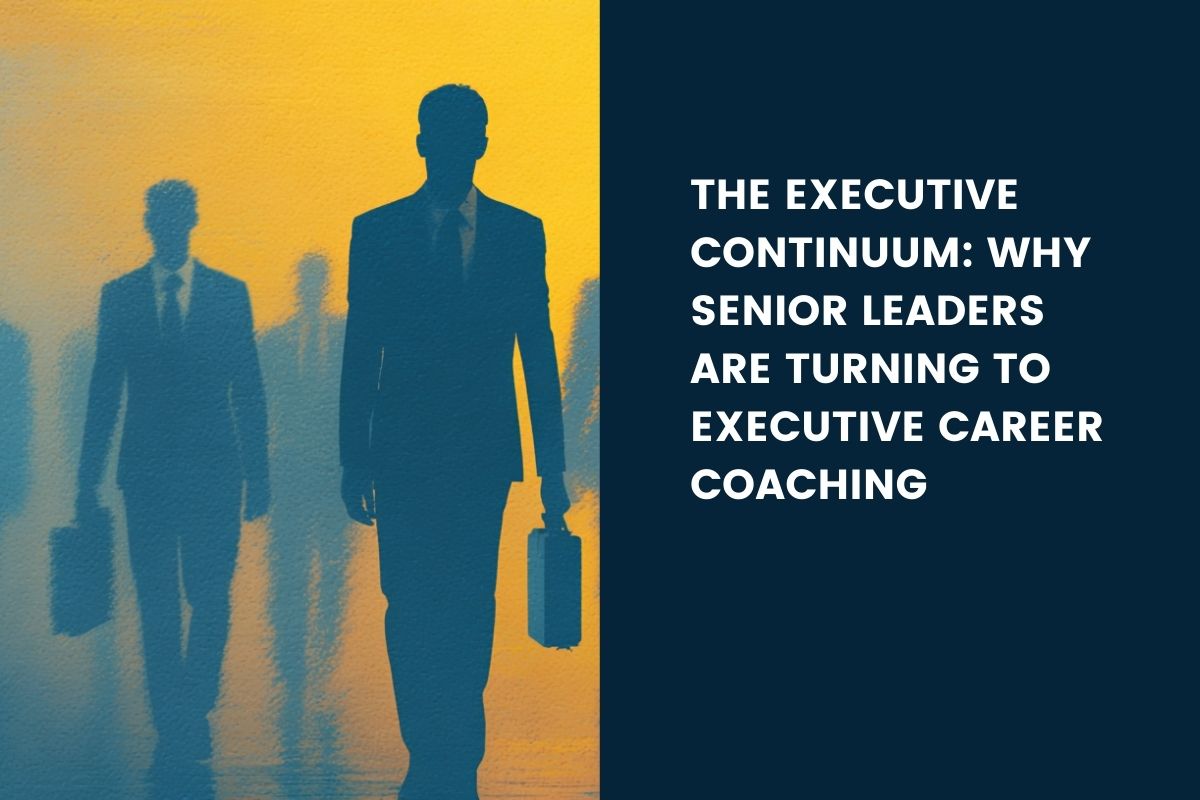
The Executive Continuum was developed in response to what we observe in CEO and board selection processes. Senior careers do not evolve through isolated leaps. They develop through phases of reflection, recalibration and renewed positioning.
The Continuum moves through six structured stages, beginning with a strategic career audit and progressing through enterprise impact refinement, narrative development, stakeholder mapping, board and CEO readiness testing, and ultimately transition planning. The intention is not to manufacture ambition but to bring coherence to it.
Boards evaluate leaders across multiple dimensions — oversight capability, judgement under pressure, cultural maturity and long-term thinking. Without deliberate reflection, even highly capable executives can struggle to evidence these qualities clearly.
Structure creates alignment between capability and visibility.
Communication as Evidence of Thinking
At CEO and board level, communication is not about presentation skill. It is a window into judgement.
In high-stakes conversations, directors observe how complexity is framed, how uncertainty is acknowledged and how confidence is balanced with restraint. Enterprise presence emerges through clarity and proportion.
Within The Executive Continuum, executive career coaching focuses on strengthening this clarity. It refines how enterprise impact is articulated, how transitions are explained, and how leadership direction is expressed with authority. The objective is not performance enhancement; it is disciplined alignment between thinking and expression.
Why Governance Proximity Matters
Galvin-Rowley Executive works closely with Boards on CEO appointments, succession planning and leadership transitions. We see how decisions are formed in practice, not theory. That proximity informs the structure of The Executive Continuum.
James Fremantle leads the coaching advisory within our team, bringing deep expertise in executive communication and high-stakes narrative refinement. Together, this integration of governance insight and communication discipline ensures that executive career coaching reflects real board expectations.
This is structured advisory for leaders operating at scale — discreet, considered and aligned to enterprise realities.
Strategic Foresight, Not Remediation
Senior leaders who engage in executive career coaching are not seeking rescue. They are exercising foresight.
They recognise that in competitive CEO and board markets, readiness must be visible. Capability must be articulated. Direction must be coherent. The next chapter deserves intention.
The strongest careers are rarely accidental. They are designed.
Considering Your Next Move?
If you are reflecting on CEO progression, board aspiration or strategic transition, The Executive Continuum offers executive career coaching grounded in governance reality rather than generic advice.
To learn more, visit our Executive Career Coaching page or contact:
Jen Galvin-Rowley
+61 410 477 235
jen@galvinrowley.com.au
All discussions are confidential and advisory in nature.